
Consultations and procedures are strictly by appointment. Book A Free Consultation

BienPoMD Aesthetics

10

Face treatment

Otoplasty (ear Surgery)

Balanced ears, refined facial harmony. Personalized Otoplasty, earlobe repair, or ear-tag removal based on your anatomy and concern.

Published rate₱25,000–₱50,000

Real patient outcomes

Otoplasty (ear Surgery) Results

Browse every applicable before-and-after image published by BienPoMD for this procedure.

6 published cases
Swipe Or Scroll To Explore
Transformation immediately after incisionless otoplasty.
One-week transformation after ear tag or accessory tragus removal.

Individual results vary. Lighting, angle, timing, anatomy, and healing can differ between cases. Images are educational and do not promise or guarantee a specific outcome.

What Is Ear Surgery?

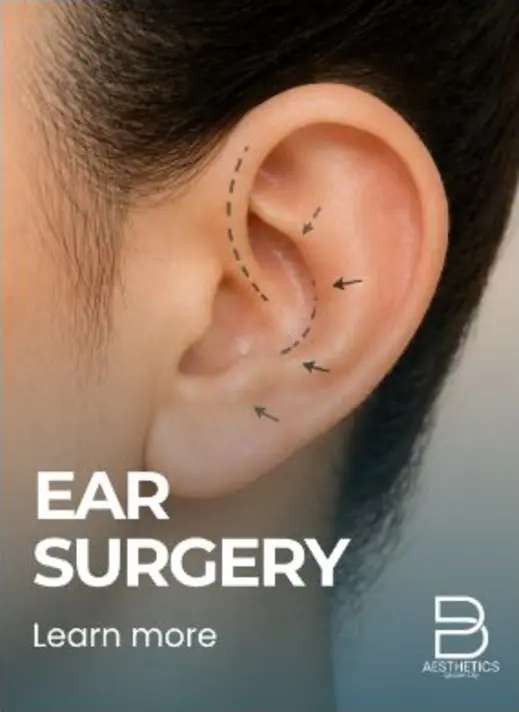
Ear Surgery, also called Otoplasty, includes minor procedures that improve prominent ears, selected ear-shape concerns, torn or stretched earlobes, and ear tags. The recommended technique depends on the ear cartilage, the concern being treated, natural asymmetry, and the change that can be achieved safely.

Ear Procedures and Published Rates

01

Incisionless Otoplasty — ₱40,000

Uses carefully placed sutures to bring suitable prominent ears closer to the head without a skin incision. It is intended for selected patients without enlarged or overly developed conchal cartilage.

02

Traditional Otoplasty — ₱50,000

Uses incisions hidden behind the ear to reshape and reposition the cartilage. It may be recommended when the cartilage itself needs more correction.

03

Earlobe Repair — ₱25,000

Repairs a stretched or torn earlobe caused by earrings, gauges, or trauma and restores a more natural earlobe shape.

04

Ear Tag Removal — ₱25,000–₱30,000

Removes a congenital ear tag or accessory tragus near the ear. The final rate depends on the size and complexity of the tissue being removed.

Who May Be a Candidate?

Assessment may be appropriate for patients with prominent ears, an ear shape that feels out of balance with the face, a torn or stretched earlobe, or an ear tag. An in-person examination is required to assess cartilage shape and thickness, skin, natural asymmetry, previous injury or surgery, scarring tendency, health, and realistic expectations.

Procedure Overview

AnesthesiaLocal anesthesia with mild oral sedation
Procedure timeApproximately 1–2 hours
Typical discomfortPublished guide: about 2/10; individual experience varies
Stitch removalUsually around Day 7 when required
Initial healingApproximately 2–4 weeks
Full healingApproximately 4–6 months

What the All-inclusive Package Covers

  • Surgeon’s professional fee
  • Operating room and nursing team
  • Standard surgical tools, materials, and supplies
  • Basic postoperative medicines
  • Basic aftercare supplies

Basic laboratory tests may be required for selected patients, especially those with hypertension, diabetes, or another medical condition. The source page lists an optional IV sedation upgrade at ₱10,000, with full laboratory tests estimated at ₱4,000–₱5,000. Final suitability, inclusions, and pricing are confirmed after assessment.

Recovery and Limitations

Swelling, bruising, tenderness, temporary numbness, and mild asymmetry are expected during early healing. A protective dressing or headband may be advised after Otoplasty. Avoid pressure, pulling, contact sports, and trauma to the ears until cleared.

The goal is better balance, not perfect symmetry. Scars, cartilage response, suture visibility, recurrence, infection, bleeding, wound problems, contour irregularity, and the possible need for further treatment must be discussed before surgery.

The most suitable technique can only be chosen after an in-person ear examination. No specific shape, exact symmetry, invisible scar, permanent correction, or complication-free recovery can be guaranteed.
Medically Reviewed By Bien Po, M.D.
Last Reviewed: July 26, 2026

Frequently asked questions

Ear Surgery FAQs

Will Ear Surgery leave visible scars?

Incisionless Otoplasty does not use a skin incision. Traditional Otoplasty usually places the incision behind the ear or within a natural fold. Earlobe and ear-tag procedures may leave a scar. Scars often fade, but no scar can be promised to become invisible.

What is the difference between incisionless and traditional Otoplasty?

Incisionless Otoplasty uses sutures to reposition suitable ears without cutting the skin. Traditional Otoplasty uses a hidden incision to reshape or reposition cartilage when a larger correction is needed. The right method depends on your anatomy.

Can both ears be treated in one session?

Yes, both ears are commonly treated during the same session when medically appropriate. Planning still accounts for each ear’s natural differences, and perfect symmetry cannot be guaranteed.

How much downtime should I plan?

Some patients return to light work or school in about 3–5 days, but visible swelling and tenderness can last longer. Initial healing usually takes 2–4 weeks, while the ear continues settling for several months.

Are the results permanent?

The correction is intended to be long-lasting, but no result is guaranteed to be permanent. Trauma, strong tension, cartilage memory, suture problems, aging, and healing differences can change the result or require revision.

Can Ear Surgery be combined with another procedure?

Sometimes, when the total treatment time, anesthesia, health, and recovery plan remain safe. Dr. Bien will advise whether combining procedures is appropriate after assessment.

Your Best Next Step Is a Conversation.

Meet Dr. Bien in person, discuss what concerns you, and receive an honest assessment of what may—or may not—be appropriate.

Book A Free Consultation Ask BienPoMD