Consultations and procedures are strictly by appointment. Book A Free Consultation

BienPoMD Aesthetics

06

Eyes treatment

Under Eye Fat Graft Transfer

Restore selected volume beneath the eyes using your own carefully prepared fat, with a plan based on the tear trough, lid-cheek junction, skin quality, and facial balance.

Published rate₱60,000 awake · ₱80,000 with IV sedation

Real patient outcomes

Under Eye Fat Graft Transfer Results

Browse every applicable before-and-after image published by BienPoMD for this procedure.

5 published cases
Swipe Or Scroll To Explore
One-week transformation after Under Eye Fat Graft Transfer.
Two-week transformation after Upper Blepharoplasty with Under Eye Fat Graft Transfer.

Individual results vary. Lighting, angle, timing, anatomy, and healing can differ between cases. Images are educational and do not promise or guarantee a specific outcome.

What Is Under Eye Fat Graft Transfer?

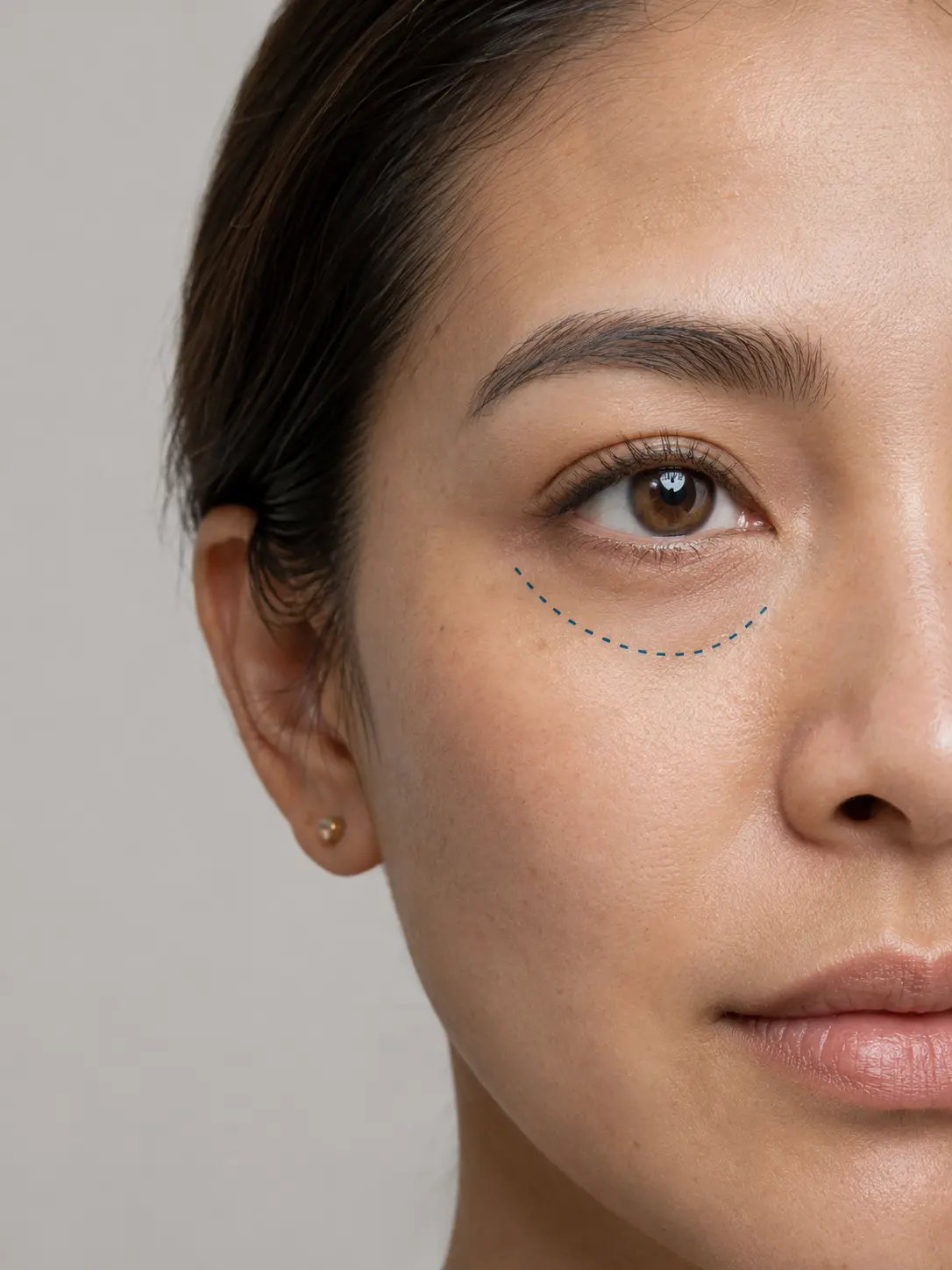
Under Eye Fat Graft Transfer uses a small amount of your own fat to restore selected volume beneath the eyes. Fat is harvested from a suitable donor area, carefully prepared, then placed in small amounts along the tear trough and lid-cheek junction.

The goal is to soften hollowing and the shadow it creates—not to overfill the lower eyelid or change your natural eye shape.

Who May Be a Candidate?

This procedure may be considered when the main concern is:

  • A visible tear trough or sunken under-eye area
  • A deep transition between the lower eyelid and cheek
  • Volume loss that creates a tired-looking shadow
  • Dark circles caused mainly by under-eye hollowing and shadowing
  • A preference to discuss autologous fat instead of a temporary filler

It is not the correct treatment for every dark circle or eyebag. Pigmentation, thin skin, visible vessels, skin laxity, prominent fat pads, cheek support, and lower-eyelid position must be assessed before a plan is recommended.

Procedure Overview

Anesthesia optionsAwake under local anesthesia or with IV sedation
Fat sourceA suitable donor area selected during assessment
Treatment planSmall-volume placement based on the tear trough and lid-cheek junction
Early recoverySwelling and bruising may affect both donor and treated areas
Follow-upRequired to monitor healing and volume retention
Final volumeSome transferred fat is naturally reabsorbed; retention varies

Published Rates

Awake under local anesthesia₱60,000
With IV sedation₱80,000
Each additional treatment area+₱10,000

IV sedation requires the clinic’s prescribed fasting plan, laboratory clearance, and a responsible companion. The donor area, number of treatment areas, inclusions, and final total are confirmed after the in-person assessment.

Risks and Limitations

Possible concerns include swelling, bruising, prolonged puffiness, asymmetry, contour irregularity, undercorrection, overcorrection, lumps, oil cysts, infection, fat necrosis, donor-site irregularity, and the possible need for further treatment. Rare but serious vascular complications can cause skin injury, vision loss, stroke, or other permanent harm.

Fat grafting cannot guarantee complete correction of dark circles, exact symmetry, or a fixed amount of surviving volume. It does not replace Lower Blepharoplasty when prominent fat bulges are the main concern.
Medically Reviewed By Bien Po, M.D.
Last Reviewed: July 26, 2026

Frequently asked questions

Under Eye Fat Graft Transfer FAQs

What is the difference between the awake and IV-sedation options?

The awake option uses local anesthesia while you remain conscious. IV sedation is administered with an anesthesiologist and has additional fasting, laboratory-clearance, transport, and recovery requirements. The suitable option depends on your health, comfort, and treatment plan.

What counts as an additional treatment area?

An additional area is a separately planned region beyond the under-eyes, such as the cheeks or temples when clinically appropriate. Each additional area is ₱10,000. The exact areas and total price are confirmed during consultation.

Will all of the transferred fat survive?

No fixed survival percentage can be guaranteed. Some fat is naturally reabsorbed while the retained fat must establish a blood supply. Early swelling can temporarily make the area look fuller than the final result.

Is this the same as Eyebag Surgery?

No. Under Eye Fat Graft Transfer adds selected volume for hollowing. Eyebag Surgery removes or repositions prominent lower-eyelid fat when bulging is the main concern. Some patients have a combination of hollowing and bulging, so an examination is necessary.

Will it remove dark circles?

It may soften a shadow caused by a deep tear trough, but it will not reliably correct pigmentation, thin skin, visible vessels, allergies, or every cause of under-eye darkness.

How is fat grafting different from under-eye filler?

Fat grafting uses your own tissue and requires a donor site, preparation, and a more involved recovery. Hyaluronic-acid filler does not require fat harvesting and is temporary. Each option has different benefits, limitations, and risks; neither is automatically better for every patient.

Your Best Next Step Is a Conversation.

Meet Dr. Bien in person, discuss what concerns you, and receive an honest assessment of what may—or may not—be appropriate.

Book A Free Consultation Ask BienPoMD